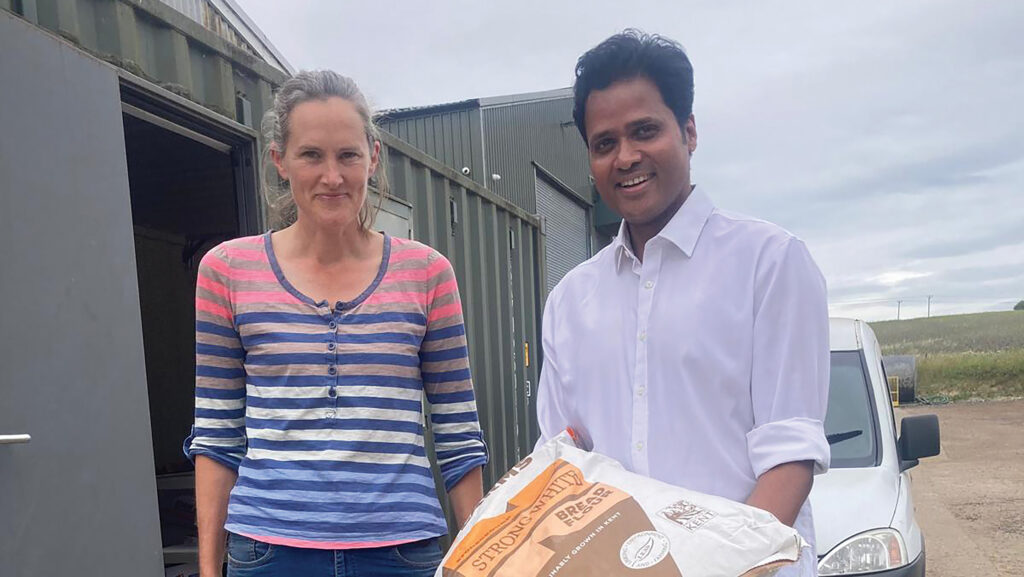
Kent farmer Emma Loder-Symonds and Canterbury chef Dev Biswal are joining forces on an ambitious project to discover whether an ancient grain could have a very modern future in British farming – and on our plates.
Could the next exciting Kent-grown ingredient be millet?
At Nonington Farms, farmer Emma Loder-Symonds is leading a pioneering project alongside Canterbury chef Dev Biswal to investigate whether proso millet – an ancient, naturally gluten-free grain – could become a commercially viable food crop for British farmers.
Called The Mill-it Project, the initiative brings together farming and food, with Emma leading the project and Dev exploring the grain’s culinary possibilities.
And some of the most interesting work is happening right here in Kent.
Millet and beans were drilled at trial sites in Kent and Bedfordshire in May 2026, as part of a project examining everything from how the crop performs in British rotations to its nutritional value, processing possibilities and, importantly, what we could actually do with it in the kitchen.
Despite millet already being grown in Britain as birdseed, its potential as a higher-value crop for human consumption remains largely unexplored.
Emma said: “We are excited to explore the potential of millet as a food crop in the UK. Working alongside scientists and farmers across the country, we will trial how millet could fit into British rotations and food systems and investigate how processing and fermentation may improve its nutritional value.”
Farmer meets chef
Emma is working with Dev Biswal, owner-chef of Canterbury restaurants The Cook’s Tale and Café Marrakech, who will lead recipe development as part of the project.
Their relationship actually began through food, with Dev sourcing local ingredients for his restaurants from Nonington Farms.
The pair have previously collaborated using organically grown wheat from the farm to produce Indian flatbreads, alongside locally grown seasonal vegetables. During that relationship, Dev became increasingly impressed by Emma and the farm’s willingness to experiment with alternative crops and more sustainable farming practices.
“When I met Emma Loder-Symonds and the team at Nonington Farms, I realised we shared a common vision: finding practical and commercially viable solutions to future food security and climate challenges,” said Dev.
His interest in millet was strengthened during a culinary research trip to India last year for his The Cook’s Adventures travel arm.
Millets have been part of Indian cuisine for thousands of years, particularly in Dev’s home state of Odisha, where they have traditionally been cultivated in some of the country’s more challenging agricultural environments.
“As a chef, I was fascinated not only by their nutritional value but also by their remarkable flavour, versatility and culinary potential,” he said.
“What struck me most was how relevant these ancient grains are to the challenges facing modern agriculture.”
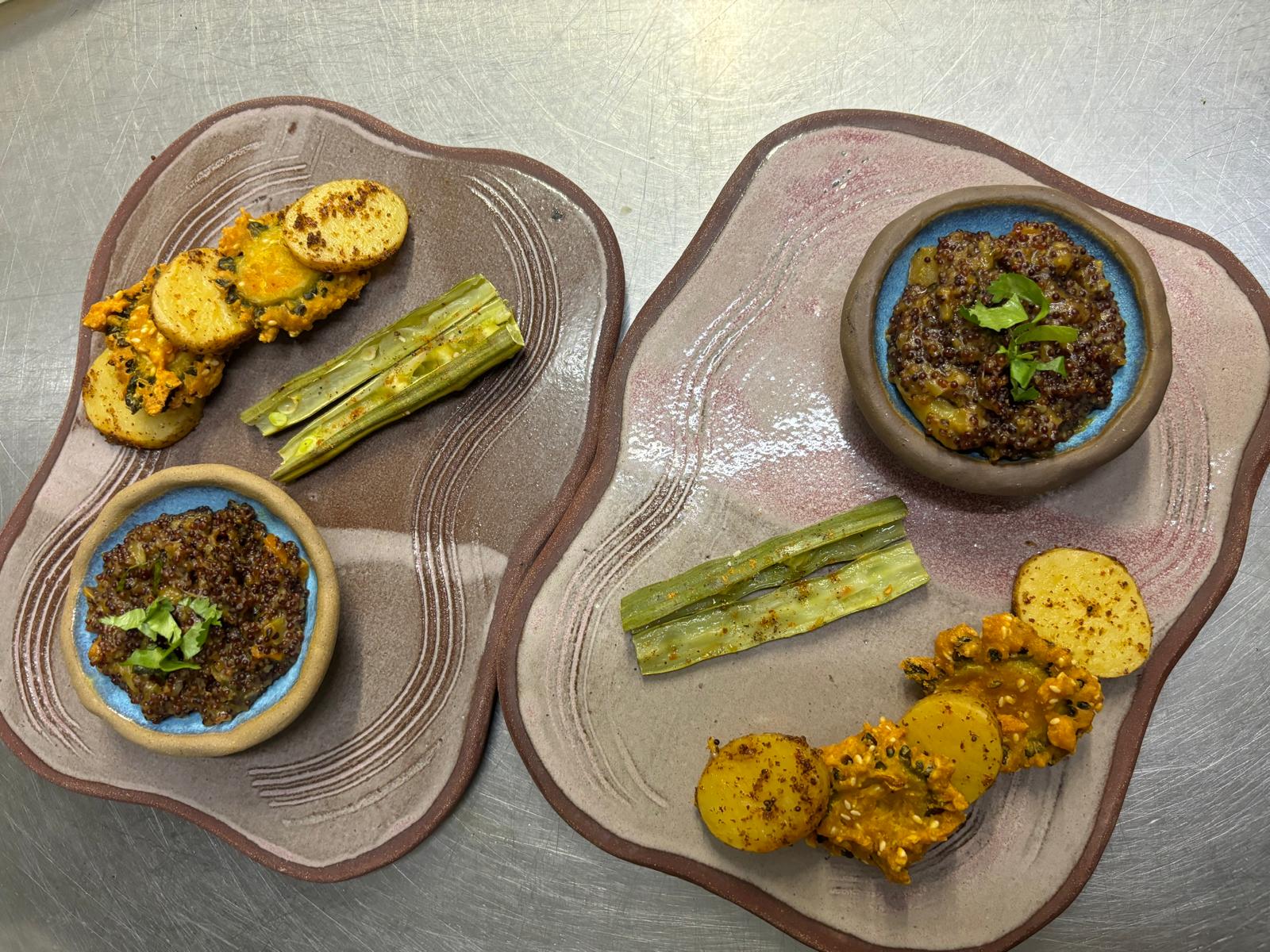
Dev already uses imported millet on his menus. The tantalising prospect now is whether one day that millet could be grown much closer to home.
Why millet?
There are some compelling reasons for putting the crop to the test.
Millet is naturally gluten-free, can thrive in harsh growing conditions and is resilient to drought and extreme weather. Research suggests some millet varieties require up to 70% less water than rice while maintaining strong nutritional value.
There is also potential to explore the grain through fermentation and growing consumer interest in gut health.
For farmers, meanwhile, the project comes at a time when increasing climate pressures are prompting arable growers to look for alternatives to traditional break crops such as oilseed rape.
The Mill-it Project involves DEFRA, with funding from Innovate UK, and will bring together a wider consortium of farmers, scientists and food specialists. Field-scale trials in Kent and Bedfordshire will be combined with nutritional analysis, pre-processing research and Dev’s recipe development.
Ultimately, Emma and the team want to discover whether proso millet can work both sides of the equation: as a practical, profitable crop for British farmers and as a delicious, nutritious ingredient that people actually want to eat.
And that’s what makes this collaboration particularly interesting.
You’ve got a Kent farmer asking “Can we grow it?”, a Kent chef asking “What can we do with it?” and a project trying to connect the two.
From a field at Nonington Farms to a plate in Canterbury? Now that’s something we’d like to taste.